
Posted by BNTECHGO on 8th Mar 2026
Yellow-Green Wire (PE Wire) Explained: Grounding Functions and Safe Usage Guide
Learn about the function, application scenarios, and correct installation of the yellow-green grounding wire - the Protective Earth (PE) wire to ensure electrical safety in homes, industrial systems, and new energy vehicles. This article provides a comprehensive overview of the role, applications, and key precautions of the yellow-green wire, helping you improve your electrical safety awareness.
In daily life and industrial electrical systems, we often see a wire with yellow and green stripes. Unlike the live (phase) wire, it does not normally carry voltage, and unlike the neutral wire, it is not part of the working circuit. However, its presence is directly related to electrical safety.
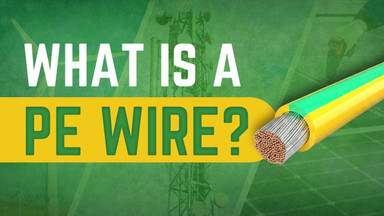
This wire is what we commonly call the grounding wire—Protective Earth (PE wire).
1. What Is the Yellow-Green Wire (PE Wire)?
The yellow-green wire is a dedicated conductor used for protective earthing (Protective Earth, PE) in electrical systems.
Its primary function is:
- When leakage current or insulation failure occurs in equipment, it safely conducts dangerous current into the ground, preventing electric shock to people.
Why Yellow and Green?
-
- The yellow-green striped color is an internationally recognized grounding identification (based on IEC standards).
- It is designed to be highly visible and standardized, reducing the risk of misconnection.
- When you see a yellow-green wire, it should be clearly understood as a safety protection conductor, not a working conductor.
International Color Notes
- Most countries use yellow-green or green-yellow striped insulation.
- In North America (the United States and Canada), the following are permitted:
- Solid green insulated wire
- Green-yellow striped wire
- Bare copper wire
Regardless of color or form, the function is the same: protection only, not current-carrying in normal operation.
2. The Role of the PE Wire in Electrical Systems
1) Preventing Electric Shock
When internal insulation in equipment ages or is damaged, metal enclosures may become energized.
The PE wire provides a low-impedance path that directs leakage current to the ground instead of through the human body, significantly reducing the risk of electric shock.
2) Working with Residual Current Protection Devices
The PE wire typically works together with circuit breakers or residual current protection devices (RCD / GFCI / ELCB):
- Under normal conditions, all current flowing through the live wire returns via the neutral wire.
- During leakage, part of the current flows through the PE wire into the ground.
- The protection device detects this imbalance and disconnects the power immediately, preventing ongoing danger.
3) Improving System Safety and Stability
Proper grounding can also:
- Reduce static electricity buildup
- Minimize electromagnetic interference (EMI)
- Improve equipment reliability and lightning protection
Although the PE wire normally “does not carry current,” it becomes the last line of defense when a fault occurs.
3. Differences Between the PE Wire and Other “Grounds”
These are commonly confused. The table below provides a clear comparison under normal operating conditions:

Key Reminders
- The PE wire must never be used as a neutral wire (this can cause enclosures to remain energized).
- The PE wire should not be arbitrarily bonded with signal ground, as this may introduce interference or compromise protection.
Common Grounding System Types Worldwide
Grounding methods vary slightly by country or region:
- TN-S system (e.g., safest, recommended for modern buildings): PE and N are completely separate throughout.
- TN-C-S system: A combined PEN conductor is used in part of the system and separated later.
- TT system: Equipment is directly grounded; strong reliance on residual current protection is required.
- IT system: Common in hospitals and mines; the power source is not directly grounded.
In older buildings or certain regions, a dedicated PE wire may be missing. In such cases, residual current protection devices must be installed, or grounding upgrades should be carried out.
4. Common Application Scenarios for Yellow-Green Wires
Residential and Building Electrical Systems
- Grounding contacts in three-prong outlets
- Appliances with metal enclosures (e.g., air conditioners, water heaters, washing machines)
- Grounding bars and equipotential bonding in distribution panels
Industrial and Equipment Power Systems
- Motors, pumps, and machine tool enclosures
- Control cabinets and PLC panels
- Automated production line equipment
New Energy and Electric Vehicles
- EV charging station grounding
- PE conductors in charging guns and cables
- Grounding of battery pack metal structures
Laboratories and Precision Equipment
- Test instruments and oscilloscopes
- Medical equipment (CT scanners, X-ray machines)
Anti-static grounding in laboratory power systems
5. Precautions When Using Yellow-Green Wires
- Use grounding wires that comply with international standards (yellow-green, green-yellow, solid green, or bare copper).
- Ensure grounding connections are firm and reliable; regularly check contact resistance.
- During renovations or DIY work, make sure the PE wire is continuous and unbroken.
- Do not cut, splice arbitrarily, or replace other conductors with the PE wire.
- Never use the PE wire as part of a working circuit.
- For old outlets without a PE wire, install proper grounding or use outlets with residual current protection.
Correct use of the PE wire is one of the most basic—and most important—requirements in electrical installation safety.
6. Summary
Although the yellow-green wire (PE wire) often goes unnoticed, in critical moments it can:
- Prevent electric shock accidents
- Protect human life
- Improve the overall safety of electrical systems
No matter where you live, checking whether household appliances and outlets are properly grounded is the first step in protecting yourself and your family.
Electrical safety starts with understanding and valuing this seemingly “inconspicuous” grounding wire.
7. Contact Us
We hope this article has helped you better understand the yellow-green grounding wire.
For more information about our products and services, please feel free to email us at support@bntechgo.com,
visit our website at https://bntechgo.com,
or follow us on YouTube, Facebook, TikTok, LinkedIn, and Instagram.
We look forward to connecting with you and supporting your electrical safety needs and projects.





If you wish to repost this article, please credit the source.